Maintaining a comfortable and healthy home environment requires more than regular cleaning and maintenance. One essential aspect of home maintenance is pest management, especially when thinking about obtaining a bug control service near you. If you are planning to hire a bug control service near you, preparing your property beforehand can help the treatment work more effectively.
The Role of Pest Management in Home Maintenance
Pest management plays a vital role in maintaining a safe and healthy living environment. It involves strategies and practices designed to reduce or eliminate pests such as insects, rodents, and other unwanted pests from your home. An effective pest management strategy helps prevent damage to your property and reduces potential health risks associated with pests.
Hiring a professional bug control service near you can help safeguard your home from pests that damage property, contaminate food, and spread disease. Regular pest management also helps identify and address potential problems before they develop into larger infestations. As part of home maintenance, it ensures your space remains hygienic rather than a breeding ground for pests.
Incorporating pest management into your routine home maintenance schedule also helps sustain property value. Potential buyers often consider pest problems as significant drawbacks, and a history of professional pest control treatments can indicate that the property has been well cared for and maintained. Ultimately, pest management is integral to preserving both the structural condition and the aesthetic appeal of your home.
Researching Reliable Bug Control Services Near You
Finding a reliable bug control service near me is an important step for effective pest management. With many options available, it can be challenging to select the right service provider. Start by researching local companies, paying close attention to reviews and testimonials from previous clients.
Begin with a simple online search for “insect control near me” to gather a list of pest control companies operating in your area. After shortlisting, check customer reviews and ratings on platforms like Google and Yelp. Consider feedback about the effectiveness of their treatments, quality of customer service, reliability, and their professionalism.
It is also important to verify the credentials of the pest management companies. Ensure they are licensed and insured, as this protects you from liability in case of accidents or property damage during the treatment. Additionally, a licensed company is likely to follow relevant industry standards and regulations, ensuring quality and safe practices.
A reputable bug control service will be transparent about their processes, pricing, and what you can expect during and after the treatment. Choosing a reliable pest management service ensures that your investment in safeguarding your home is put to good use.
Safety Measures for House Occupants
Protecting the health and safety of your household members should be a priority when preparing for a bug control treatment. Proper safety measures ensure that everyone, including pets, stays safe during the process.
First, discuss with your pest management service about the chemicals and methods they intend to use. Understanding the products involved helps you take necessary safety precautions. You should also confirm how long family members and pets need to stay away from treated areas and when it is safe to return.
When re-entering treated areas, wearing gloves and masks can prevent unnecessary exposure to chemicals. Adhere strictly to guidelines about areas and times to avoid during treatments. Following these safety measures can reduce potential risks during pest control treatments and ensure a seamless return to your pest-free home afterwards.
Proper Cleaning and Decluttering Tactics
Before a pest control technician arrives, adequately cleaning and decluttering your home is crucial in optimizing the effectiveness of the treatment and reducing potential hiding places for pests.
Start by thoroughly vacuuming and dusting your home. Pay special attention to corners, areas beneath furniture, and baseboards, where dust and debris are more likely to accumulate and provide shelter for pests. Cleaning these spaces reduces pest infestations and allows pest control treatments to work more effectively.
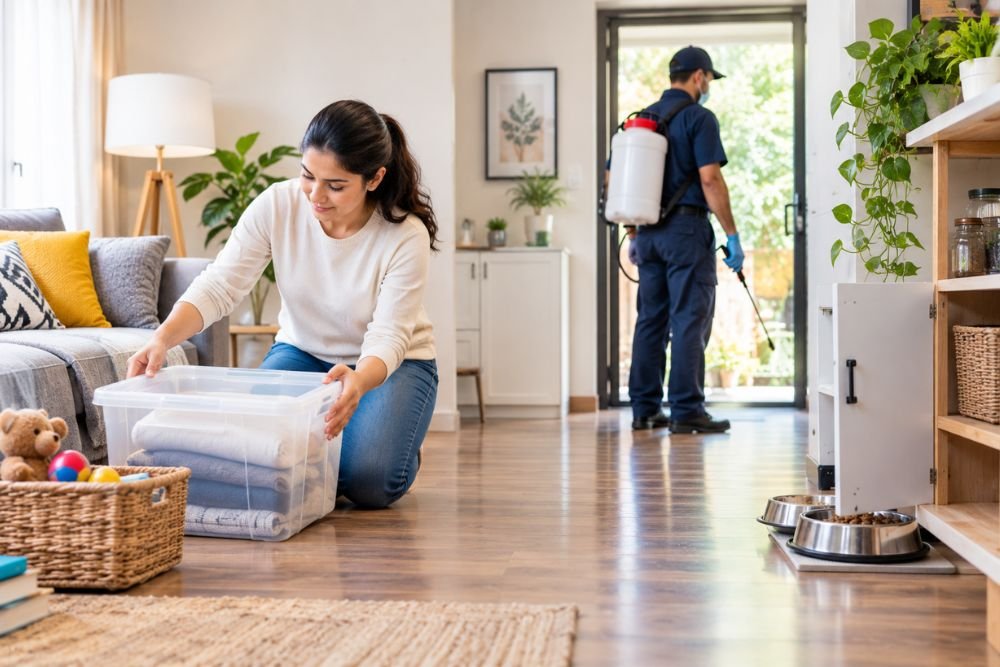
Decluttering is another important step before pest control treatment. Clear items from kitchen countertops, create more space in closets, and organize storage areas to eliminate potential hiding places for pests. Store items neatly in containers to organize items, ensuring easy access for pest control professionals.
Store food items securely and cover any utensils or food preparation surfaces to prevent contamination from pest control treatment. Clear spaces around areas where pests are most likely to be treated, such as kitchen sinks, laundry areas, and bathrooms. A clean and organized home not only assists the pest treatment process but also creates an environment that discourages future infestations.
Handling Trash and Compost Appropriately
Proper management of waste and compost is an integral part of preparing for pest control. Poor waste management can attract pests and reduce the effectiveness of the treatments administered.
Ensure that all trash bins have tightly fitting lids to prevent pests from scavenging. Empty kitchen bins regularly, and sanitize them to remove residues and unpleasant odours that could attract insects and rodents. Always seal trash bags properly before disposal to maintain a hygienic environment.
Although Composting is beneficial for gardening, its poor maintenance can attract pests. Compost bins should have secure lids and be kept at a safe distance from the house. Turn the compost regularly and manage it properly to minimize odours and create an unfavorable environment for pest activity.
Communication Tips for Effective Service
Good communication with your pest management professionals is essential when preparing for a bug control treatment. Clear communication helps the service providers understand your concerns and employ effective strategies.
Start by explaining your pest-related concerns to the service provider in detail. Mention any signs of infestations you’ve noticed, such as droppings, nests, or visible insects. Providing this information helps the pest control team assess the situation and tailor their approach to addressing your specific issues.
Ask the pest control professionals about the treatment process, the products they plan to use, their effectiveness, and any safety measures and post-treatment precautions you need to take. A reliable service provider will be transparent, ensuring you understand each step of the process and how it may impact your home.
Always share your feedback about the service received, either through a follow-up call or an online review. Your comments can help them improve their service quality and address any concerns. Maintaining open communication ensures that the pest control treatment meets your home’s specific needs.
Following Post-Treatment Guidelines
Following the recommended guidelines after a pest control treatment is essential for maintaining its effectiveness and achieving long-lasting results. These guidelines help you keep your home safe and reduce the likelihood of future infestations.
- Avoid cleaning treated areas immediately after the service. Most pest control products require time to be absorbed or dry completely to be effective. Clean only areas that the pest control provider has confirmed safe to clean.
- Follow the pest management professional’s instructions regarding the handling of food, utensils, and other household items after treatment.
- If recommended, ensure proper ventilation in treated areas to dispel any residual odors or chemicals.
- Besides, confirm when it is safe to reintroduce pets and children to treated zones.
Following these post-treatment precautions is designed to maximize the effectiveness of the pest control efforts while maintaining a safe and comfortable environment for your home.
Maintaining a Pest-Free Home After Treatment
Even after professional pest control treatment, continuous efforts are necessary to maintain a pest-free home. Conducting routine checks for pest activity can help prevent new infestations and preserve a clean and healthy living space.
Conduct Regular Pest Inspections
Regular inspections are essential for keeping pest problems under control. Check your home for signs of pest activity at regular intervals, including droppings, nests, damaged food packaging, or structural damage. Focus on potential pest hotspots, such as kitchens, bathrooms, storage areas, and spaces beneath furniture. Identifying these signs early allows you to address pest problems before they become serious infestations.
Maintain Proper Sanitation Practices
Keeping your home clean and organised is critical for preventing pest infestations. Regularly clean food preparation areas, dispose of waste properly, fix water leaks, and remove unnecessary clutter. These simple practices help eliminate potential food sources, moisture, and hiding places for pests. Good sanitation also contributes to a healthier and more comfortable living environment.
Schedule Periodic Professional Pest Control Services
Schedule routine maintenance visits with professional pest control providers to ensure long-term protection. These visits allow professionals to inspect pest-prone areas, identify early signs of infestations, and recommend suitable preventive measures. Periodic professional inspections, combined with proper household maintenance, can help keep your living space safe, clean, and pest-free.
Conclusion
Preparing your home for a bug control treatment involves strategic planning and a few essential precautions to achieve effective, long-lasting results. By understanding the importance of pest control in home maintenance and choosing a reliable service provider, you create an initial line of defense against infestations. Following safety guidelines, proper cleaning and decluttering tactics, and post-treatment care further solidify your household’s protection. With regular inspections, proper sanitation practices, and clear communication with pest management professionals, you can maintain a pest-free home environment that promotes both safety and comfort for your family.
Frequently Asked Questions
1. What should I do before a pest control treatment?
Before a pest control treatment, thoroughly clean and organize your home, store food items securely, and remove unnecessary items from treatment areas. Ensure that pest control professionals have easy access to areas where pests are likely to hide. Following the service provider’s preparation guidelines can help improve the effectiveness of treatment.
2. Is it necessary to clean my house before pest control treatment?
Yes, cleaning your home before pest control treatment helps remove food residues, dust, and clutter that may attract pests. Focus on kitchens, bathrooms, storage spaces, and areas beneath furniture. However, avoid disturbing known pest nests or existing bait stations unless a pest control professional instructs you to do so.
3. Should I remove food and kitchen utensils before pest control?
Food items should be stored in sealed containers or cupboards to prevent potential contamination. Remove or cover kitchen utensils, dishes, and food preparation equipment from areas scheduled for treatment. Follow the service provider’s instructions regarding any additional safety precautions.
4. Do I need to leave my home during pest control treatment?
Whether you need to leave your home during pest control treatment depends on the treatment method and products used. Certain treatments require the family members and pets to stay away for a specified period, while others may not. Always follow the pest control professional’s safety guidelines and recommended re-entry time.
5. How long should I wait before cleaning my house after pest control?
The recommended waiting period before cleaning depends on the type of pest control treatment. Some products need sufficient time to dry or remain undisturbed to work effectively. Avoid washing or wiping treated surfaces until the pest control provider confirms it is safe. Surfaces that come into contact with food should be cleaned according to the recommended safety instructions.
6. How can I prevent pests from returning after treatment?
Maintain proper sanitation practices, dispose of household waste regularly, seal cracks and openings, and repair leaking pipes. Store food in secure containers and inspect your home for early signs of pest activity. Scheduling routine professional inspections can also help reduce the risk of future infestations.