
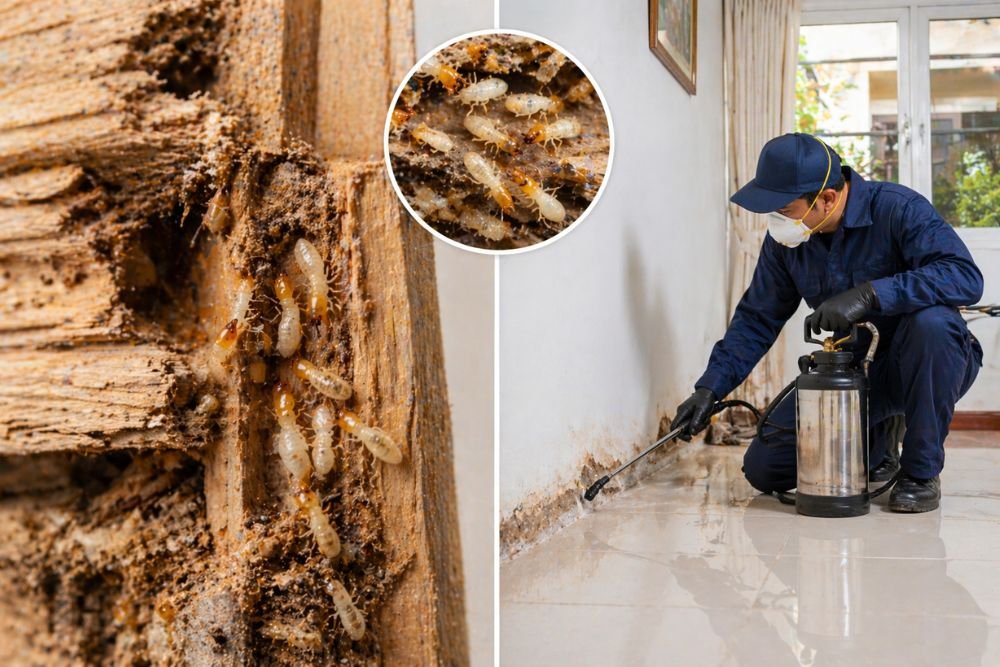
Protecting the structural integrity of a home requires constant attention, especially when dealing with hidden threats like termites. These tiny pests can cause extensive damage before their presence becomes noticeable. Understanding why termite control is essential helps homeowners take timely action to safeguard their property and avoid costly repairs.
Introduction
Termites can silently infest homes and cause serious structural damage before their presence becomes noticeable. Termites, often called “hidden invaders,” work discreetly and tirelessly beneath the surface, eroding the foundation of our homes. In this article, we explore the gravity of the termite menace, reveal their destructive capability, and elucidate the necessity of proactive termite prevention and control measures. This article explains the key risks of termite infestations and the importance of proactive control measures.
The Hidden Dangers of Termites
Termites are not just mere nuisances; they are covert scavengers capable of causing large-scale damage. Unlike pests such as ants or cockroaches, termites function outside of our immediate line of sight, often nesting deep within the walls and foundations. This stealthy nature makes early detection challenging, leading to prolonged infestations before visible signs surface.
Besides the structural havoc they wreak, termites can also compromise the safety of a home. Buildings infested by termites can develop weakened structures, which might become hazardous over time. Therefore, understanding the hidden dangers posed by termites can help underscore the importance of diligent termite prevention methods.
Recognizing Signs of a Termite Infestation
Recognizing signs of a termite infestation early can potentially save thousands of dollars in repairs. As a homeowner, becoming vigilant about these subtle indicators is key:
- Discarded Wings: Swarmers shed their wings after finding a suitable place for a colony. These discarded wings often signal the inception of a new infestation.
- Hollow-Sounding Wood: Tapping on wooden structures that sound hollow can indicate an infestation, as termites eat wood from the inside out.
- Mud Tubes: Subterranean termites often build mud tubes for moisture as they travel between their colony and the food source.
Through keen observation and regular check-ups, we can learn to identify these signs, thus enabling timely intervention to prevent further damage.
The Financial Costs of Ignoring Termite Control
The financial impact of ignoring termite control can be more significant than anticipated. Left unchecked, termites can cause destruction that leads to costly repairs and devaluation of the property.
A typically affected home may incur repair costs that can range in the thousands due to structural damages. Even more detrimental is the potential depreciation in property value if termite infestation and damage are discovered during a future sale.
Moreover, home insurance policies frequently do not cover termite damage, meaning homeowners must bear the full brunt of repair costs themselves. Thus, the financial rationale for termite prevention through early detection and timely mitigation is clear.
Long-Term Damage to Property Structure
The presence of termites can result in long-term structural damage, compromising the integrity of our homes. Termites thrive on cellulose found in wood, and when they infest, they methodically eat away at the wooden components of a house.
In many cases, damage extends beyond merely wooden surfaces, impacting flooring, walls, and even wooden furniture. It’s a phenomenon that escalates over time, progressively weakening the frame and support structures upon which our homes are built. Without intervention, this can lead to major structural failures, endangering the occupants’ safety and necessitating substantial repairs.
Indirect Risks Termites Create for a Safe Living Environment
By ensuring termite prevention, we inadvertently guard against several indirect risks termites pose to our living environments. When they hollow out the wooden elements of a house, termites can cause unforeseen risks like electrical hazards as they eat through insulation around wires.
Moreover, the integrity of staircases, ceilings, and flooring becomes questionable over time, increasing the chances of unexpected accidents or injuries. The moisture that termites need to survive can also contribute to the growth of mold, posing respiratory risks. Hence, addressing termites also helps to maintain a holistic, safe living environment.
Importance of Regular Inspections
Regular termite inspections are essential for early detection and effective prevention. Regular termite inspections are a cornerstone of effective termite prevention. Scheduled inspections conducted by professionals not only help in identifying and preventing infestations but can also guide us through effective mitigation strategies.
Regular check-ups allow pest control professionals to detect vulnerabilities in our homes that are often overlooked. By doing so, we can take timely corrective action, which is invariably more cost-effective than post-infestation interventions.
Choosing the Right Termite Control Methods
Selecting the appropriate termite control method is crucial to curb existing infestation and prevent future occurrences. Various methods cater to different infestation levels and house structures:
- Liquid Termiticides: These are often used for creating a chemical barrier in the soil around the house, preventing termites from entering.
- Baiting Systems: This strategy involves placing bait stations around the perimeter of a home, which worker termites consume and bring back to the colony, leading to its eradication.
Termite control methods should be selected based on infestation level and property requirements.
The Role of Professional Termite Exterminators
Professional termite exterminators play an indispensable role in managing and eliminating termite problems. Their expertise in identifying termite-related issues and deploying effective solutions ensures that we address the core of the infestation problem.
By consulting with professionals, we gain insights into the best practices specific to our dwelling’s needs. Moreover, they utilize advanced technology and treatments that may not be accessible to the average homeowner.
Relying on experts not only ensures termites are efficiently handled but also provides peace of mind, knowing that our home’s health is in capable hands.
Conclusion
In conclusion, termite control is a fundamental aspect of responsible homeownership, safeguarding our financial investments and ensuring our families live securely and comfortably. By adopting proactive termite prevention strategies, including regular inspections and bespoke control methods, we protect against the severe damage termites can cause.
Termites may operate in silence, but by increasing our awareness and taking decisive action, Proactive termite control helps maintain structural safety and long-term property protection.